
How Bolsius went from an AI pilot that delivered nothing to three working apps in eight weeks
Bolsius has made candles since 1870. A year ago AI was a black box there: a four-month pilot had come to nothing, and people were afraid that whatever they put in would end up on the street. Gunter van der Sluis, Global Head of Business Excellence, decided the company could not stop there. He tells how Bolsius chose which processes to start with, and why his colleagues now come to him with new processes they want to put on AI.
At a glance.
Customer
Bolsius, a family-owned candle maker since 1870, with the biggest candle factory in Europe.
The first three apps
Order intake for customer service, a check of every claim on the packaging, and a social commerce tool for marketing.
How fast
Eight weeks, in July and August 2026, built together with the business teams.
What comes next
Three new use cases every quarter, each with its own business case.
A pilot of four months, and nothing came out
Bolsius looked at AI in two ways, Gunter says. It was a black box, and a risky one, because everything you put in could be out on the street. And there was the talk that a company that did not jump in would be behind its competition within two years.
So a group of pioneers got a licence for a general AI assistant and was asked to try it in their own business unit for four months. Nothing came out of it. Finance tried to let AI write the monthly report on the business results, and it did not work: nobody had told the AI how to behave, which information to use, and what to do and not to do. Gunter compares it to a new coworker who is put behind a desk without being shown the company. That person fails too.

“It was just a piece of smart brains with no hands and feet around it, and that’s why it failed.”
“We needed AI, but just didn’t know how”
After the pilot it went quiet, and Gunter did not accept that. Bolsius is a family business, with no pocket of money for a big programme, so whatever came next had to be practical. All he knew was that the first try had failed, and that his colleagues were protective: “our gold cannot be out on the street.”
Looking back, he sees what went wrong. “AI was framed like a chatbot. And a chatbot and business processes are two completely different worlds.” The work at Bolsius is in its processes, and that is where he went looking.
Two processes where the work piled up
Gunter put the CFO, the CMO, the IT lead and himself in a room with Aimable. It was not an easy session, he says, because they were still searching. They came out with two processes.
The first was order taking. Bolsius gets orders every day from retailers all over the world. Only three pieces of information have to go into the order system, but every retailer sends them in its own format, so it is a lot of manual work and sensitive to errors.
The second was the new rules against greenwashing. Gunter’s example: “contains natural ingredients” on a pack is no longer allowed. Bolsius had to check everything it claims, on hundreds of products, in every language and on every marketing touchpoint, and it has one compliance manager.
One question, 35 use cases
In June Gunter took it to the management team with one question: which process is time-consuming or annoying, or is something we need to do but cannot do today? Ten minutes and 25 people later there was a list of 30 to 35 use cases. “That really flipped the coin.”
They agreed on eight weeks, July and August, to build three apps together with the business teams, and to continue if it worked. We had suggested starting with one. Gunter: “No, we’re gonna do three, because we need three.”
The first three apps.
Order intake
The app knows the Bolsius item codes and the retailers, so it can read every incoming order, in whatever format it arrives, and find the information the order system needs. Customer service stays. Today they are so busy taking orders and fixing errors that there is no time to give retailers better service, and that time is what AI should give them.
Checking every claim
The agent was given the laws and directives, and told to use nothing else. It takes the product information from Bolsius’s own product information system, scans what is claimed and in which context, and reports back in a fixed way: is it right or wrong, and what is the appropriate action to take.
Social commerce
Bolsius has a new webshop, and a webshop needs content. The tool has 17 agents, each trained on its own material, such as the brand book, the social playbook and consumer insights. A consultant sits on top. When a marketer’s brief is too thin for the agents to do the job, it asks for more first.
Days, not months
Bolsius has a great IT department, Gunter says, but an application built there takes months. If it turns out nine months later that it does not deliver, you cannot easily turn it around.
The three apps run on Aimable Agentic OS, and there the rounds go fast. A first version is built in days. A business user tries it, and some things are good and some are not. They talk it through on a call that is recorded, the app is updated in a matter of hours, and the next morning there is a new version to try. His condition is that the business knows its own process first: “brains before AI, not AI before the brains.” As long as it is not clear how the process works in real life, do not start.
“AI does the things with you. Not instead of you.”
Three every quarter
After the pilot Bolsius decided to make AI part of how the company works. The list of 30 to 35 is now the shortlist. Two projects started straight out of the pilot, because the people asking for them did not want to wait: a product configurator for the candle recipes and all their variants, and product images for the webshop pages, which are a lot of manual work for the studio today.
From here Bolsius takes on three use cases every quarter. Each one starts with its own business case: what needs to be created, and what it takes. The direction Gunter gives it is a self-improving organisation, so Bolsius stays the leading candle company in Europe.
“Go do it. Have a pragmatic can-do mentality, and peel down the onion. It’s not that black box. Keep it simple.”
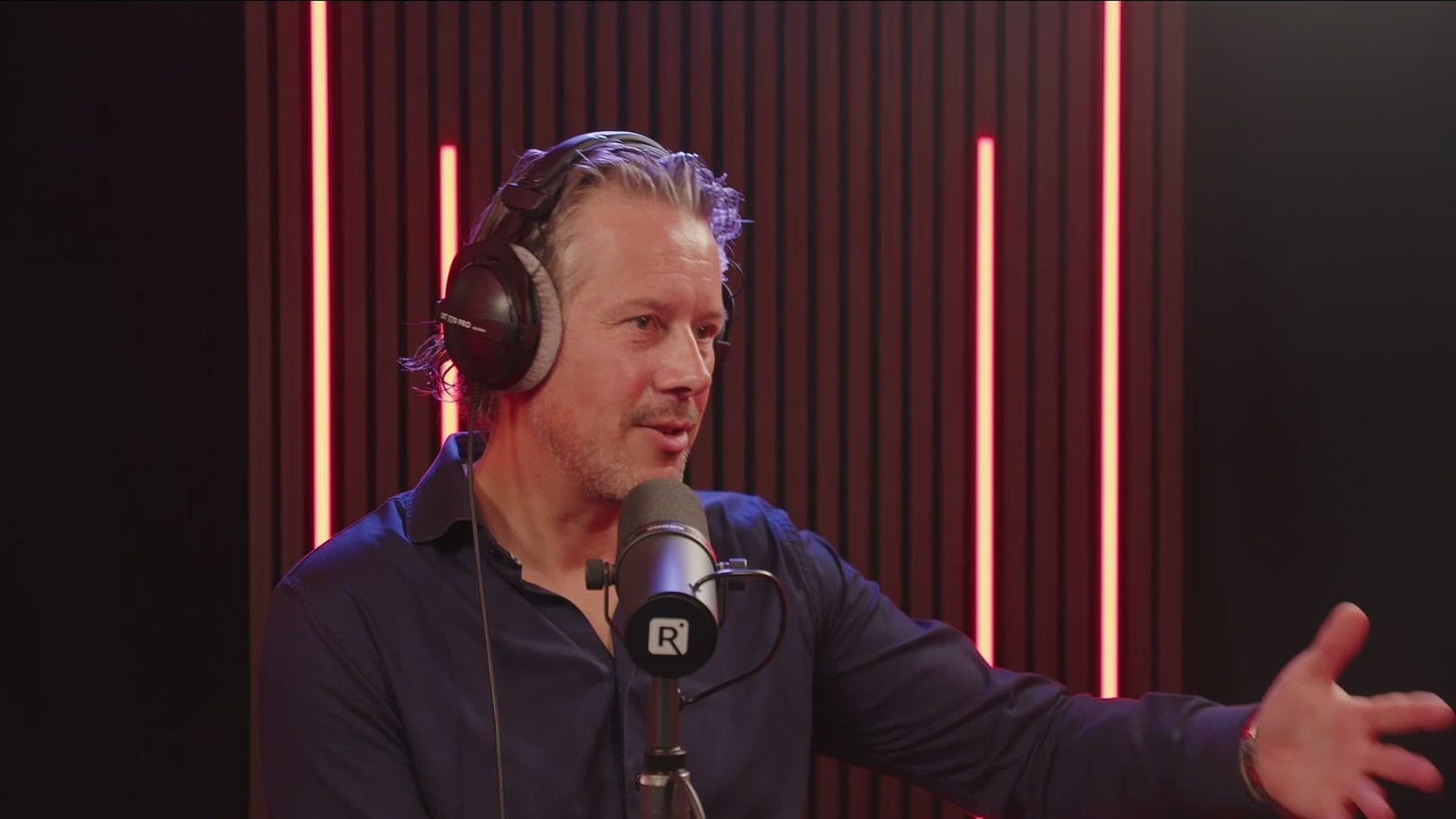
Watch Gunter tell it himself.
The webinar of 6 October 2026, 30 minutes, with the order intake app and the social commerce tool at work.
Where would AI pay back first in your company?
Investment memos, support answers, tenders, order intake: every customer began with one process, and none of them knew which one on day one. We help you find yours.
Shall we find yours together?