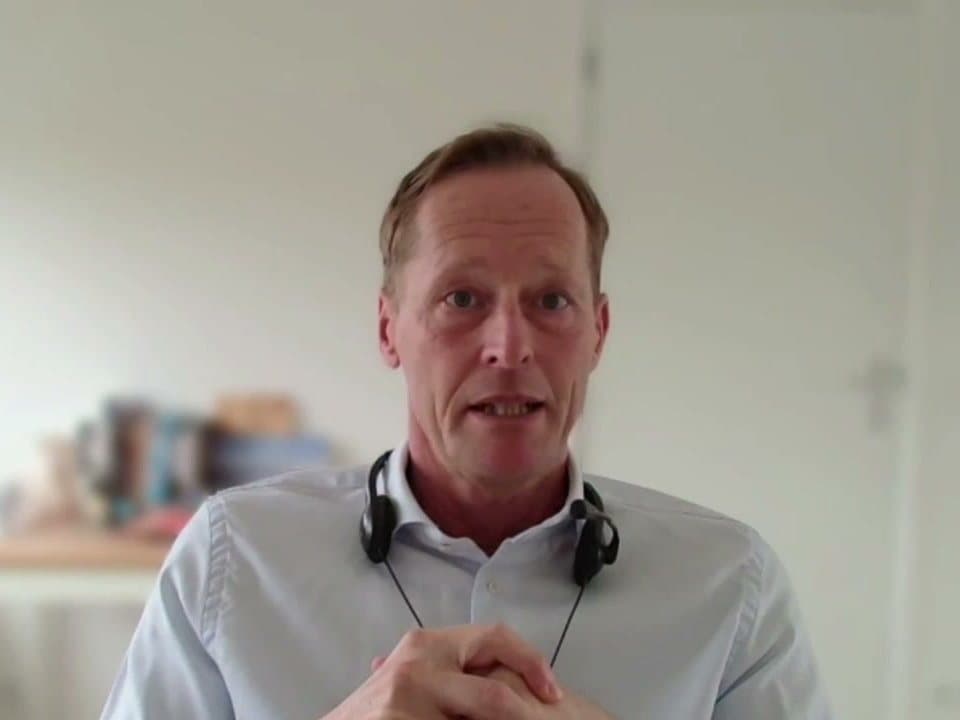
Gunter van der Sluis, Bolsius
How a 150-year-old candle company got from 35 possible use cases to the first three working AI apps.
 Watch the webinar
  Let’s talk
 HR2day manages the salary, contract and absence data of Dutch employers, some with thousands of employees. They chose to adopt AI in a controlled way, and their service desk now answers from their own documentation, with the source attached, while personal data is protected along the way.
HR and recruitment software and payroll. Part of the Visma group.
Salary, contracts, addresses and absence records of their customers’ employees.
Service desk, customer success, sales, and even customers.
Support answers from their own documentation, with the source attached, while personal data is protected along the way.
Managing Director of HR2day, on working with Aimable.
Marco Boerlage wants to lead with AI. For two years he has been actively steering it: monthly sessions, ground rules for employees, high awareness. At the same time HR2day processes its customers’ most sensitive data, and they take that responsibility seriously. Seizing the opportunities without putting that data at risk: that was the challenge.
Blocking was technically possible, but then you miss the improvement. And there was the manual work: a customer report Marco was enthusiastic about turned out to be two days of work, mostly spent making the data unrecognisable by hand.

“I see AI as an enabler for us to be better, to be faster, more tailored to our customers. That’s why we do it. And at the same time we have to be careful, because we’re dealing with personal data. That’s the tension.”
What HR2day learned about safe AI use: blanking everything out is safe, but useless. In a salary analysis, redacting the salary is the same as throwing away the question. The point is to understand the goal, and on that basis to protect what must be protected and let through what is needed.
“The one time you have to protect the salary, in the other situation you don’t want that at all. So it’s very important for a tool to understand the context and the goal. Help me protect the things that need to be protected, and at the same time help me answer the question.”
The service desk answers customer questions from thousands of curated documents of their own: the question goes in exactly as the customer asked it, and what comes out can be checked and forwarded, even live during a phone call. Everything runs inside their own European cloud environment.
“I find that a billion times more powerful. And more fun, and simpler, because you don’t have to think about it. It just goes right.”
The report that took two days has become a repeatable process. The service desk helps customers faster, with the source attached. And the attitude flipped from being concerned about AI to being enthusiastic about it.
Power users at HR2day’s customers now get direct access to their own workspace with curated documentation, through the existing platform. What began as the question of how to let employees work with AI safely now brings innovation to HR2day’s services.
To be fair: trust in the answers is something you build, especially with employees who are new to it. That takes good source documentation and the habit of checking before anything goes out the door. HR2day and Aimable work on that together. “Quality over speed, a long-term view. That is what makes it work.”
With a public AI you cannot see what was done with your data. Here you can: requests and processing are logged. That also shows which questions live in the organisation and where people need more guidance.
The right AI is chosen per question. A change at one provider does not stop the work.
Because use, processing and results are recorded, the platform helps HR2day comply with the AI Act.
“A great tool sells itself. You don’t have to explain it, just use it and you’ll see what it can do for you.”
How a 150-year-old candle company got from 35 possible use cases to the first three working AI apps.
Watch the webinar Five things an investment team needs to get right when AI joins the deal process.
 Watch the webinar
 Why HR2day put AI to work on the most sensitive data there is, and what it needed to trust it.
 Watch the webinar
 Every one of these stories started with one process, found in a first conversation. Thirty minutes with the Aimable team is enough to see where yours would start.
Shall we look for your starting point?